You slept enough. You haven’t done anything physically demanding. By every objective measure, you should feel fine.
But your brain feels like wet concrete. You can’t concentrate. Everything feels slightly irritating. You open your phone without knowing why. You start three things and finish none of them. The idea of sitting down and doing something that requires real thought feels almost unbearable.
This is not laziness. This is not depression. This is not a personality flaw.
This is dopamine overload — and it is quietly becoming the defining cognitive condition of modern men. Your brain is exhausted not from doing too much, but from being stimulated too much. And there is a critical difference between the two that most men never stop to understand.
What Dopamine Actually Does (And What Happens When There’s Too Much)
Dopamine is the most misunderstood chemical in the brain.
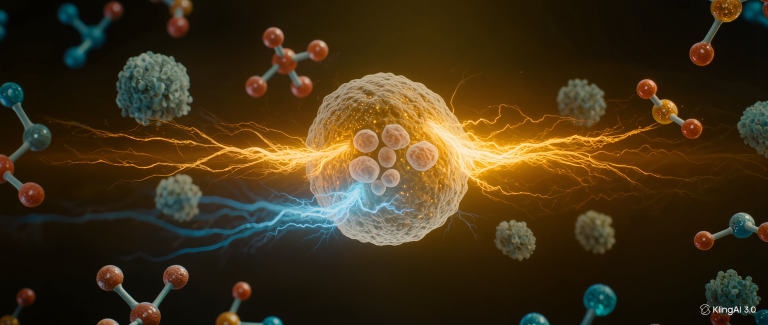
Most people think it’s the pleasure chemical — the thing that makes you feel good. That’s not quite right. Dopamine is primarily the anticipation and seeking chemical. It is released in response to the prediction of reward, not just the reward itself. It drives you toward things. It creates wanting, craving, and the urge to pursue.
In the environment your brain evolved in, this was essential. Dopamine motivated you to hunt, to explore, to solve problems, to build, to connect. The rewards were real but infrequent. The effort required to obtain them was substantial. Your dopamine system was calibrated for a world where rewards required work.
The modern digital environment has broken that calibration completely.
Every notification, every scroll, every like, every autoplay video delivers a small dopamine hit with zero effort required. The reward comes instantly, repeatedly, endlessly. Your dopamine system — designed for a world of effortful, infrequent rewards — is now receiving hundreds of low-grade hits per hour, every hour, every day (Nature Neuroscience — Dopamine and Reward Prediction).
The result is not more pleasure. It is tolerance.
Just like any system chronically overstimulated, your dopamine receptors downregulate. Your brain reduces its sensitivity to dopamine in an attempt to maintain balance. And when your dopamine sensitivity drops, everything that doesn’t deliver instant, high-stimulation reward starts to feel flat, boring, and impossibly difficult to engage with.
Deep work. Reading. Planning. Creating. Exercising. Conversations without screens. These are all low-dopamine-hit activities relative to your phone. And when your baseline has been reset by hundreds of daily digital spikes, they feel like nothing. Not rewarding enough. Not stimulating enough. Not worth starting.
That friction you feel before doing real work? That’s not procrastination. That’s a recalibrated dopamine system demanding a level of stimulation that meaningful work cannot provide.
How Social Media Is Engineered to Hijack Your Brain
This is not accidental. It is by design.
The platforms that dominate your attention were built by teams of engineers and behavioral psychologists whose singular goal is to maximize the time you spend on their product. They use variable reward schedules — the same mechanism that makes slot machines addictive — to keep you scrolling. Sometimes you see something interesting. Most of the time you don’t. But the unpredictability of the reward is precisely what makes the seeking behavior compulsive.
Every feature of these platforms is optimized to exploit your dopamine system. Likes and comments create social validation hits. Infinite scroll removes the natural stopping point your brain needs to disengage. Autoplay eliminates the moment of choice between episodes. Notification badges create unresolved anticipation that pulls your attention back compulsively.
You are not weak for finding these things compelling. You are a human being with a dopamine system that was not designed to resist billion-dollar attention engineering. The playing field is not level. And pretending willpower alone is the solution is how men stay stuck in the cycle for years.
The solution is not moral fortitude. It is system design — building an environment that removes the stimulation before the compulsion arises.
What Dopamine Overload Does to Your Brain Day to Day
The effects of chronic overstimulation are not dramatic. They’re subtle, pervasive, and easy to misattribute.
Mental fatigue without physical cause. Your body is rested. Your brain feels exhausted. This is the cognitive load of constant stimulation processing — your prefrontal cortex has been firing reactively all day, handling incoming information rather than generating original thought.
Inability to sustain attention. You sit down to read, write, or think — and within minutes your attention drifts. Not because the task is too hard, but because your brain has been conditioned to expect a new stimulus every 8–15 seconds. Anything that doesn’t deliver that rhythm feels unbearable.
Chronic procrastination. The gap between intention and action widens. You know what you should be doing. You don’t do it. Instead you find yourself in a low-stimulation holding pattern — not working, not resting, just consuming — because starting anything real feels harder than it should.
Motivational flatness. Long-term goals stop feeling motivating. The future feels abstract and distant compared to the immediate pull of the next scroll. Ambition fades not because you’ve stopped caring, but because your dopamine system has been recalibrated to prefer near-term, low-effort stimulation over delayed, high-effort reward.
Reduced capacity for enjoyment. Activities that used to feel satisfying — a walk, a meal, a conversation, a training session — start to feel underwhelming. You need more stimulation to feel the same level of engagement. This is dopamine tolerance in its most recognizable form.
If several of these sound familiar, your dopamine system has been compromised. The good news is that it responds quickly to the right inputs.
The Dopamine Reset: How to Recalibrate Your Brain
The concept of a dopamine detox has been oversimplified in popular culture — you don’t need to sit in a white room eating plain rice for a weekend. What you need is a deliberate, sustained reduction in low-effort, high-stimulation inputs that allows your dopamine receptor sensitivity to recover.
The principle is straightforward: remove the cheap hits, and real-world rewards start feeling rewarding again. Work starts feeling engaging. Focus becomes accessible. Motivation returns — not from a supplement or a pep talk, but from a nervous system that can once again feel the difference between stimulation and nothing (Frontiers in Behavioral Neuroscience — Dopamine Receptor Downregulation).
Here is how to do it practically.
Strategy #1: Cut the Cheap Hits First
You don’t need to eliminate all digital technology. You need to eliminate the lowest-quality, highest-stimulation inputs — the ones that deliver the biggest dopamine spikes with the least real-world value.
What to cut or dramatically reduce:
- Short-form video content (Reels, TikTok, YouTube Shorts) — these are the highest-dopamine, lowest-value inputs in most men’s daily lives. The rapid-fire format is specifically designed to maximize dopamine cycling
- Infinite scroll social media during work hours
- News feeds and notification checking as a reflex behavior
- Background entertainment during meals, commutes, and rest periods
How to do it without relying on willpower:
- Delete the apps from your phone. Access them only via browser, on a computer, intentionally. The added friction alone reduces consumption by 60–80% for most men
- Turn off all non-essential notifications. Not on silent — off. You check communication on your schedule, not theirs
- Charge your phone outside your bedroom. Remove it from your first and last moments of the day
You are not punishing yourself. You are removing the inputs that are quietly degrading your cognitive performance every single day.
Strategy #2: Rebuild Your Tolerance for Boredom
This is the part most men skip — and it’s the most important part.
Boredom is not a problem to be solved with stimulation. Boredom is the feeling of a dopamine system recalibrating. It is uncomfortable, temporary, and necessary. The capacity to sit with boredom — to let your mind rest without reaching for input — is the foundation of all sustained attention and creative thinking.
When you first reduce stimulation, the discomfort is real. Your brain will demand the familiar inputs. You will feel restless, irritable, and unproductive. This is withdrawal from overstimulation, and it typically lasts 3–5 days before the recalibration begins.
What to do:
- Sit with the discomfort instead of immediately filling it. Let your mind wander without direction for 10–15 minutes daily — no phone, no content, no agenda
- Replace stimulation with low-input activities: walking without headphones, cooking, stretching, sitting outside. Activities where your mind can process freely without new external input
- Notice when you reach for your phone reflexively — without purpose, without intent. That reflex is the pattern you’re breaking. Simply noticing it, without acting on it, builds the neural pathway for attention control
Within one week of consistent practice, most men report a noticeable shift. Tasks that felt impossible to start feel approachable. Silence feels comfortable rather than threatening. The brain begins to re-engage with real-world rewards.
Strategy #3: Structure Your Attention With Time Blocks
A recalibrated dopamine system still needs structure to perform at its best.
Focused work does not happen by accident in a stimulation-rich environment. It happens by design — when you create specific, protected windows where deep work is the only option available.
The time block system:
- Define your 2–3 most important tasks the night before or first thing in the morning — before any screen exposure
- Work in 45–90 minute blocks with a single defined objective per block. Not “work on the project” — “write the first draft of section two”
- Phone in another room for the entire block. Not on silent. Not face-down. Another room
- One browser tab open. No email. No messaging apps
- A timer running — the defined endpoint creates urgency and makes starting psychologically easier
Between blocks, take real breaks: walk, breathe, move. Not screens. The break is for your prefrontal cortex to consolidate and recover — not for your dopamine system to get its next hit.
Two focused 90-minute blocks of genuine deep work will produce more output than a full day of fragmented, stimulation-interrupted effort. This is not an opinion. It is the consistent finding of cognitive performance research (American Psychological Association — Multitasking Costs).
Strategy #4: Use High-Dopamine Activities Intentionally
Not all dopamine stimulation is equal — and elimination is not the goal.
Exercise produces dopamine. Cold exposure produces dopamine. Creative work, meaningful social connection, achievement, and mastery all produce dopamine. These are high-quality dopamine sources — they require effort, they build real-world competence, and they produce sustained satisfaction rather than a spike and crash.
The goal of a dopamine reset is not to live in a low-stimulation monastery. It is to replace low-quality dopamine sources with high-quality ones — so your reward system is driven by things that actually improve your life.
What to do:
- Schedule hard training early in the day — the dopamine and norepinephrine release from exercise provides hours of elevated focus and motivation
- Use cold showers as a morning dopamine tool — 2–3 minutes of cold water produces a large, sustained norepinephrine spike that sharpens attention and elevates mood for hours
- Create a “reward menu” of high-quality dopamine sources for your breaks and evenings: training, cooking a real meal, reading a physical book, time in nature, meaningful conversation
- Use your highest stimulation digital content — if you consume it at all — as a defined evening reward after real work is done. Never as a morning input
You are not removing pleasure from your life. You are upgrading the quality of what drives you.
Strategy #5: Protect Your Mornings as a Dopamine-Free Zone
The first input of the day sets the neurological tone for everything that follows.
When you check your phone within minutes of waking, you flood your brain with dopamine-triggering content before your prefrontal cortex has fully come online. You start the day reactive, distracted, and already chasing stimulation. Recovering genuine focus from that starting point takes hours — if it happens at all.
A phone-free morning is not a productivity hack. It is neurological protection for your most valuable cognitive window.
The morning protocol:
- No phone for the first 60 minutes after waking — non-negotiable
- Get outside for natural light and movement within 30 minutes — this provides a clean, high-quality dopamine and cortisol signal that sets your brain up for focused performance
- Write your top 3 priorities on paper before opening any screen
- Begin your first deep work block within 90 minutes of waking — when your dopamine baseline is clean and your prefrontal cortex is at peak function
The quality of your attention for the entire day is largely determined in the first 90 minutes. Protect them accordingly.
Common Mistakes Men Make During a Dopamine Reset
Replacing one screen with another. Deleting Instagram and immediately spending more time on YouTube solves nothing. The format matters as much as the platform. Short-form, high-stimulation content is the problem regardless of which app delivers it.
Going too extreme and quitting within three days. A total digital blackout is unsustainable for most men with jobs and social lives. Sustainable reduction beats dramatic short-term elimination every time. Cut the worst inputs first and build from there.
Expecting immediate focus gains. The first 3–5 days of reduced stimulation feel worse, not better. The discomfort is the recalibration. Push through it — the shift on day 5–7 is significant and motivating.
Treating the reset as a one-time event. Dopamine recalibration is not a weekend detox. It is an ongoing management of your stimulation environment. The inputs will creep back if you don’t maintain the systems that limit them.
Using food as a substitute stimulation source. High-sugar, high-fat food is a powerful dopamine trigger. Men reducing digital stimulation often unconsciously increase food stimulation. Be aware of this pattern.
Your Simple Dopamine Reset Protocol
Day 1–3 (reduction phase):
- Delete short-form video apps from your phone
- Turn off all non-essential notifications
- No phone for the first 60 minutes of the day
- No screens for the last 60 minutes before bed
- Replace one hour of evening content consumption with a walk, reading, or low-stimulation activity
Day 4–7 (recalibration phase):
- Add structured work blocks — 45–90 minutes, phone removed, single task
- Build in one daily “boredom window” — 15–20 minutes with no input, no agenda
- Morning movement before any screen exposure
- Notice the shift in your baseline — tasks feel more approachable, silence feels less threatening
Ongoing (maintenance):
- Keep the structural limits in place permanently — not as restriction, but as environmental design
- Use high-quality dopamine sources (training, cold exposure, creative work, nature) as your primary reward inputs
- Audit your stimulation environment monthly — identify what has crept back in and recalibrate
Where Natural Support Fits In
As your dopamine system recalibrates, certain natural compounds can support the neurological recovery process.
Lion’s mane mushroom supports nerve growth factor production — promoting the neural repair and plasticity that underlies improved focus and cognitive resilience. L-theanine supports calm, focused attention during the transition period when your brain is adjusting to lower stimulation. Rhodiola rosea helps manage the mental fatigue and stress that often accompanies the early days of reduced stimulation. Magnesium glycinate supports the nervous system regulation and sleep quality that underpin long-term cognitive performance.
These are not dopamine supplements — they are nervous system support for a system in recovery. At Halixera, our cognitive and recovery formulations are built for men who are doing the real work of rebuilding their mental performance from the ground up. Explore our range when your habits are in place.
Final Word
Your brain is not broken. It has not failed you. It has adapted — rationally and predictably — to an environment that was engineered to exploit it.
Dopamine overload is not a personal weakness. It is a biological response to an unnatural stimulation load. And like all biological responses, it reverses when the inputs change.
Remove the cheap hits. Rebuild your tolerance for effort. Structure your attention deliberately. Protect your mornings. Replace low-quality stimulation with high-quality reward.
Within two weeks, the mental fog lifts. The friction before real work reduces. Motivation returns — not as a feeling you wait for, but as a state you create through the right environment.
Your ability to focus is not gone. It is buried under a stimulation load your brain was never designed to carry.
Remove the load. Reclaim the mind.