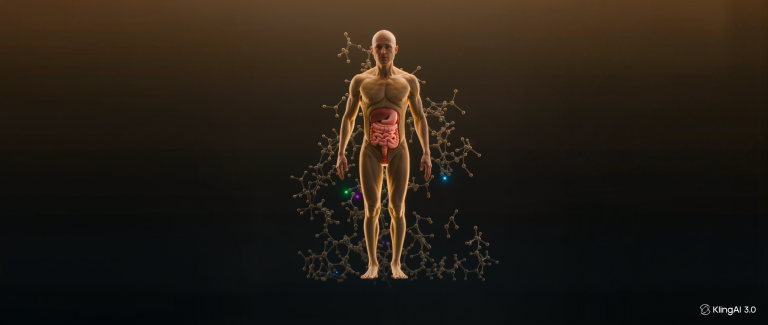
You can optimize your sleep, your training, your nutrition, and your stress management — and still hit a ceiling. A point where recovery slows, energy plateaus, and the gap between how you feel and how you want to feel remains stubbornly present.
For a growing number of researchers and longevity scientists, one molecule sits at the center of that ceiling: NAD+.
It does not have the cultural recognition of testosterone or cortisol. It does not appear on mainstream supplement labels in the way that vitamin D or magnesium do. But in the research communities studying cellular aging, metabolic health, and the biology of human performance, NAD+ — nicotinamide adenine dinucleotide — is considered one of the most important molecules in the human body. And its decline with age is increasingly understood as one of the central mechanisms through which biological aging actually happens.
Understanding NAD benefits is not fringe science. It is foundational cell biology — and it has direct implications for how you perform, how you recover, and how well you age.
What NAD+ Actually Is
NAD+ is a coenzyme — a molecule that works alongside enzymes to enable biochemical reactions throughout the body. It is present in every single cell in your body and is involved in hundreds of metabolic processes. Without it, your cells cannot produce energy. Without it, your DNA cannot be repaired. Without it, the regulatory proteins that govern cellular health and aging cannot function.
It exists in two primary forms: NAD+ (the oxidized form) and NADH (the reduced form). The cycling between these two forms — NAD+ gaining electrons to become NADH, NADH donating electrons to become NAD+ again — is the core mechanism through which your cells convert food into usable energy. Every time you eat a meal and your body extracts energy from it, NAD+ cycling is the engine doing the work.
Beyond energy production, NAD+ serves as a substrate — a raw material — for two critical classes of proteins: sirtuins and PARPs.
Sirtuins are a family of regulatory proteins often called longevity genes. They govern DNA repair, inflammation regulation, mitochondrial biogenesis, and cellular stress responses. They require NAD+ to function. When NAD+ is abundant, sirtuins are active. When NAD+ declines, sirtuin activity declines with it — and with it, the cellular maintenance and repair processes sirtuins govern.
PARPs (poly ADP-ribose polymerases) are the primary DNA repair enzymes in your cells. Every time your DNA is damaged — by oxidative stress, UV exposure, metabolic byproducts — PARPs consume NAD+ to fuel the repair process. They are essential. But they are also enormously hungry consumers of NAD+, and their activity is one of the primary drivers of NAD+ depletion, particularly as DNA damage accumulates with age.
NAD+ is not a supplement trend. It is infrastructure.
NAD+ and Mitochondrial Function: The Energy Connection
To understand why NAD+ matters for energy and performance, you need to understand where cellular energy actually comes from.
Your mitochondria — the organelles present in virtually every cell — are the primary sites of ATP production. ATP (adenosine triphosphate) is the universal energy currency of your body. Every muscular contraction, every nerve impulse, every cellular process runs on ATP. When your mitochondria function well, you produce ATP efficiently and your energy is high. When they function poorly, everything downstream suffers.
NAD+ is indispensable to this process. Within the mitochondria, NAD+ participates directly in the citric acid cycle and the electron transport chain — the two central pathways of ATP production. It accepts electrons from the breakdown of glucose and fatty acids, carries them through the electron transport chain, and enables the production of ATP at each step.
More NAD+ means more efficient electron transport. More efficient electron transport means more ATP produced per unit of fuel consumed. More ATP means more available cellular energy — translated directly into physical performance, cognitive sharpness, and recovery capacity.
The relationship between NAD+ and mitochondrial function explains something that many men notice as they move through their thirties and forties: the sense that the same food, the same sleep, the same training no longer produces the same energy. Mitochondrial efficiency declines with age. NAD+ decline is a primary mechanism driving that decline (Cell Metabolism — NAD+ and Mitochondrial Function).
This is not inevitable deterioration. It is a biological process with identifiable causes and, increasingly, identifiable interventions.
The Aging Connection: Why NAD+ Declines and What It Means
By the time a man reaches his fifties, his cellular NAD+ levels are estimated to be roughly half of what they were in his twenties. This decline is not subtle in its consequences — it is the molecular underpinning of multiple hallmarks of biological aging.
The primary drivers of age-related NAD+ decline are:
Increased PARP activity. As you age, DNA damage accumulates from decades of oxidative stress, metabolic activity, and environmental exposure. PARPs work harder to repair this damage — consuming more NAD+ in the process. The repair demand increasingly outpaces the supply.
CD38 upregulation. CD38 is an enzyme that consumes NAD+ as part of immune signaling. With age and chronic inflammation, CD38 activity increases significantly — producing what researchers describe as a “NAD+ drain” that depletes cellular stores faster than they can be replenished (Nature Metabolism — CD38 and NAD+ Decline).
Declining biosynthesis. Your body produces NAD+ through several biosynthetic pathways, primarily from dietary precursors like tryptophan and niacin. The efficiency of these pathways decreases with age, reducing the body’s capacity to replenish NAD+ as rapidly as it is consumed.
Reduced precursor availability. The dietary and lifestyle inputs that support NAD+ synthesis are frequently deficient in modern men — inadequate niacin intake, sedentary behavior, poor sleep, chronic alcohol consumption, and high caloric intake from processed food all reduce the availability of NAD+ precursors.
The functional consequences of this decline are measurable and familiar: reduced mitochondrial efficiency, impaired DNA repair, declining sirtuin activity, increased cellular senescence, reduced metabolic flexibility, and the characteristic energy decline that most men attribute to “just getting older.”
Understanding that this decline has specific molecular mechanisms is significant — because mechanisms have interventions.
Sirtuins: The Longevity Connection
No discussion of NAD+ and aging is complete without examining sirtuins in more depth — because this is where the longevity science becomes most compelling.
The seven sirtuin proteins (SIRT1–SIRT7) are among the most studied regulatory molecules in aging biology. They have been called longevity genes because organisms with enhanced sirtuin activity consistently show extended lifespan and healthspan in research models. They govern a remarkable range of critical functions: DNA repair, mitochondrial biogenesis, inflammatory regulation, circadian rhythm maintenance, metabolic efficiency, and the cellular stress response.
All of them require NAD+ as a cofactor to function. They do not just benefit from NAD+ — they cannot work without it.
David Sinclair, Professor of Genetics at Harvard Medical School and one of the most prominent researchers in aging biology, has proposed that the decline of NAD+ and subsequent loss of sirtuin activity is a central driver of aging — not just a correlate of it. His research has shown that restoring NAD+ levels in aged animals activates sirtuins, improves mitochondrial function, and produces measurable improvements in multiple aging biomarkers (Cell — NAD+ Sirtuins and Aging).
The translation of these findings to human aging outcomes requires more research than currently exists — the animal research is compelling, and early human trials are promising, but the full picture of how NAD+ restoration affects human longevity trajectories is still being written. What is not in question is that sirtuin activity declines with NAD+, and sirtuin activity governs processes that are central to healthy aging.
Lifestyle Factors That Deplete NAD+
Before examining how to support NAD+ levels, it is worth being specific about what depletes them — because most men are doing several of these simultaneously.
Chronic alcohol consumption is one of the most significant lifestyle drivers of NAD+ depletion. Alcohol metabolism consumes NAD+ at a high rate — converting it to NADH faster than it can be recycled. Regular alcohol consumption chronically skews the NAD+/NADH ratio, impairing mitochondrial function and reducing the NAD+ available for DNA repair and sirtuin activation.
Sedentary behavior reduces the metabolic demand that drives NAD+ cycling. Exercise — particularly aerobic and high-intensity training — increases NAD+ turnover and upregulates the biosynthetic pathways that replenish it. Men who do not exercise regularly show lower NAD+ precursor metabolism than those who do.
Chronic overeating and processed food consumption — particularly excessive refined carbohydrate and sugar intake — produces high levels of oxidative stress and drives PARP activation, accelerating NAD+ consumption. Caloric excess also reduces SIRT1 activity directly, impairing one of the primary mechanisms through which NAD+ is utilized for cellular maintenance.
Poor sleep impairs the circadian regulation of NAD+ biosynthesis. NAD+ levels follow a circadian rhythm — cycling through peaks and troughs aligned with the sleep-wake cycle. Disrupted or insufficient sleep impairs this rhythm, reducing the biosynthetic peaks that restore cellular NAD+ stores (Science — Circadian Clock and NAD+ Biosynthesis).
Chronic psychological stress drives inflammatory signaling that upregulates CD38 — the primary NAD+-consuming enzyme associated with immune activation. Men under sustained high stress show accelerated NAD+ depletion through this pathway.
Sun damage and UV exposure activates PARP repair mechanisms in skin cells, consuming NAD+. This is not an argument against sun exposure — which has its own significant health benefits — but is relevant context for men with high sun exposure or those managing skin health as part of a longevity strategy.
How to Support Healthy NAD+ Levels Through Lifestyle and Nutrition
The most accessible and evidence-supported approach to maintaining healthy NAD+ levels does not require supplementation. It requires optimizing the lifestyle inputs that support your body’s own NAD+ production and utilization.
Exercise — The Most Powerful NAD+ Lifestyle Lever
Physical exercise is the single most well-documented lifestyle intervention for supporting NAD+ metabolism.
Aerobic exercise increases the expression of NAMPT — the rate-limiting enzyme in the primary NAD+ biosynthesis pathway — and activates SIRT1 and SIRT3, the sirtuins most directly associated with mitochondrial function and metabolic health. High-intensity interval training appears to produce particularly robust effects on mitochondrial NAD+ metabolism.
Resistance training supports NAD+ through its effects on muscle mitochondrial density — more mitochondria means more sites of NAD+ cycling and more capacity for efficient energy production.
The practical implication is straightforward: regular, consistent exercise — combining cardiovascular and resistance training — is the most accessible tool for maintaining NAD+ metabolism as you age. Men who exercise consistently show better mitochondrial function, higher NAMPT expression, and better-preserved metabolic flexibility than sedentary men of the same age (Cell Metabolism — Exercise and NAD+).
Caloric Restriction and Intermittent Fasting
Caloric restriction — reducing caloric intake without malnutrition — is one of the most robustly documented interventions for extending lifespan and healthspan across multiple species. A primary mechanism is NAD+ and sirtuin activation.
When calories are restricted, the relative ratio of NAD+ to NADH increases — activating sirtuins and the cellular maintenance programs they govern. The same mechanism appears to operate during intermittent fasting, making time-restricted eating a potentially practical approach for men who find prolonged caloric restriction unsustainable.
The practical protocol: a consistent eating window of 8–10 hours with a 14–16 hour overnight fast produces metabolic effects that support NAD+ cycling without the complexity of strict caloric restriction. This is achievable for most men through a slightly delayed breakfast and an early dinner — without requiring precise caloric tracking.
Dietary Precursors: Niacin and Tryptophan
Your body synthesizes NAD+ from dietary precursors — primarily niacin (vitamin B3) and tryptophan, an essential amino acid. Ensuring adequate intake of these compounds through food supports your body’s NAD+ biosynthesis capacity.
Niacin-rich foods include: meat (particularly chicken, turkey, and beef), fish (tuna, salmon, anchovies), mushrooms, peanuts, and whole grains. Tryptophan-rich foods include: turkey, chicken, eggs, cheese, pumpkin seeds, and tofu.
A diet centered on whole protein sources, varied vegetables, and minimal processed food provides the precursor foundation that NAD+ biosynthesis requires — without needing to optimize specific micronutrient intake obsessively.
Sleep and Circadian Alignment
As noted above, NAD+ biosynthesis follows a circadian rhythm. Protecting that rhythm through consistent sleep timing — the same bedtime and wake time daily — preserves the biosynthetic peaks that restore cellular NAD+ stores overnight.
The combination of adequate sleep duration (7–9 hours), consistent timing, and quality (dark, cool, quiet environment) supports both the circadian regulation of NAMPT expression and the overnight cellular repair processes that consume NAD+.
Reducing Alcohol Consumption
Given alcohol’s direct and significant impact on NAD+/NADH ratio and mitochondrial function, reducing or eliminating alcohol consumption is one of the most direct lifestyle interventions for supporting cellular NAD+ availability. This is particularly relevant for men over 35 who notice that alcohol’s impact on energy and recovery has become progressively more pronounced — a physiological reality that reflects the declining NAD+ buffer capacity that comes with age-related depletion.
NAD+ Precursor Supplementation: NMN and NR
No discussion of NAD+ in the current landscape is complete without addressing the two primary NAD+ precursor supplements: NMN (nicotinamide mononucleotide) and NR (nicotinamide riboside).
Both are forms of vitamin B3 that enter the NAD+ biosynthesis pathway more directly than standard niacin — bypassing several metabolic steps and theoretically producing more efficient NAD+ restoration than dietary niacin alone.
The research on both compounds is active and evolving. Animal studies have shown robust NAD+ restoration and associated improvements in mitochondrial function, metabolic health, and multiple aging biomarkers. Human trials — still limited in number and scale — have demonstrated that both NMN and NR reliably increase blood NAD+ levels in human subjects, with early evidence of metabolic and physiological benefits (Nature Aging — NMN Human Trial).
NMN has received particular attention following David Sinclair’s public disclosure of his own NMN supplementation protocol and his research group’s findings in animal models. NR has been available longer and has more published human trial data, though the comparison between the two compounds in human tissue is still being actively researched.
The appropriate position on NMN and NR supplementation mirrors the position on most advanced interventions in this space: the early evidence is genuinely promising, the human research is limited relative to the animal data, and the compounds appear safe in the doses studied. For men who have optimized their lifestyle foundation and are interested in further cellular support, these compounds represent one of the more evidence-informed options in the current longevity supplement landscape.
They are not, however, a substitute for exercise, sleep, dietary quality, and stress management — the lifestyle interventions that support NAD+ through multiple pathways simultaneously and produce compounding benefits that no single supplement can replicate.
Your Practical NAD+ Support Protocol
The hierarchy of NAD+ support runs from lifestyle fundamentals to targeted supplementation — in that order.
Daily foundations:
- Exercise consistently — minimum 4 sessions per week combining resistance and cardiovascular training
- Sleep 7–9 hours at consistent times — protect your circadian NAD+ biosynthesis rhythm
- Eat whole food centered on quality protein — providing the niacin and tryptophan precursors your body needs
- Maintain a consistent eating window — 8–10 hours with an overnight fast supports NAD+ metabolism
- Minimize alcohol — particularly important for men over 35
Reduce the drains:
- Manage chronic stress actively — reduces CD38-driven NAD+ depletion
- Reduce processed food and refined sugar — lowers oxidative stress and PARP activation
- Protect sleep quality — alcohol, late eating, and screen use all impair the overnight NAD+ restoration cycle
Consider targeted supplementation when the foundation is solid:
- NMN (250–500mg daily) or NR (300–500mg daily) — taken in the morning, as NAD+ precursors align with the circadian peak in biosynthesis
- Pair with lifestyle practices rather than using as a substitute for them
- Work with a physician familiar with longevity medicine if pursuing a more comprehensive protocol
Where Halixera Fits In
Supporting cellular energy and healthy aging through evidence-informed nutrition and supplementation is central to what we build at Halixera.
Our formulations are designed around the compounds with the clearest mechanistic basis and the most relevant evidence — without the hype that characterizes much of the longevity supplement market. If you are ready to support your cellular health foundation with clean, targeted compounds, explore our range.
Final Word
NAD+ is not a buzzword. It is one of the most fundamental molecules in your biology — present in every cell, essential to every energy-producing reaction, and central to the cellular maintenance processes that determine how well you age.
Its decline with age is real, measurable, and consequential. But it is not entirely inevitable. The lifestyle choices you make every day — how you move, sleep, eat, and manage stress — directly influence your cellular NAD+ levels and the mitochondrial function that depends on them.
The ceiling you feel in your energy, your recovery, and your performance is not just a function of the habits you can see. It is partly a function of what is happening in your cells — and those cells respond to the right inputs.
Exercise. Sleep. Eat real food. Manage stress. Support the system.
The energy you are looking for is built at the cellular level. Give your cells what they need to produce it.